Have you ever felt like you’re running on a hamster wheel, constantly chasing something just out of reach? The relentless demands of modern life can leave us feeling drained, anxious, and disconnected from the simple joys around us. But what if there was a way to actively rewire your brain for happiness, a way to shift your perspective and cultivate a deeper sense of gratitude? This isn’t about ignoring challenges; it’s about fundamentally changing how you respond to them. This is the core of the Gratitude Reset – a practical, step-by-step approach to transforming your mindset and unlocking a more fulfilling life. Let’s embark on this journey together.
Understanding the Neuroscience of Gratitude
Gratitude isn’t just a nice feeling; it’s a powerful neurological response. Research in neuroscience has shown that practicing gratitude actually alters the structure and function of your brain. Studies using fMRI (functional magnetic resonance imaging) have revealed that expressing gratitude activates the ventral striatum, a region associated with reward and motivation. This activation is similar to what happens when we experience a genuine pleasure. However, unlike seeking pleasure, gratitude shifts our focus from what we lack to what we have, creating a virtuous cycle of positive emotions.
The effects extend beyond immediate feelings of happiness. Chronic gratitude is linked to increased levels of dopamine and serotonin, neurotransmitters crucial for mood regulation. Furthermore, gratitude seems to strengthen the connections between the prefrontal cortex – responsible for decision-making and impulse control – and the amygdala, the brain’s fear center. This can lead to reduced anxiety and improved emotional resilience. Interestingly, some research suggests that regular gratitude practice can even increase gray matter in the brain, potentially enhancing cognitive function. The science is clear: gratitude isn’t just a feeling; it’s a workout for your brain.
Pros: Increased dopamine & serotonin levels, reduced anxiety, improved cognitive function, stronger prefrontal cortex control. Cons: Initially, some individuals may find it challenging to identify things to be grateful for, especially during difficult times. It requires conscious effort and a willingness to shift perspective. Effects on Human Health: Improved mood, reduced stress, enhanced resilience, potentially better sleep quality due to reduced anxiety.
Step 1: The Gratitude Journal – A Daily Ritual
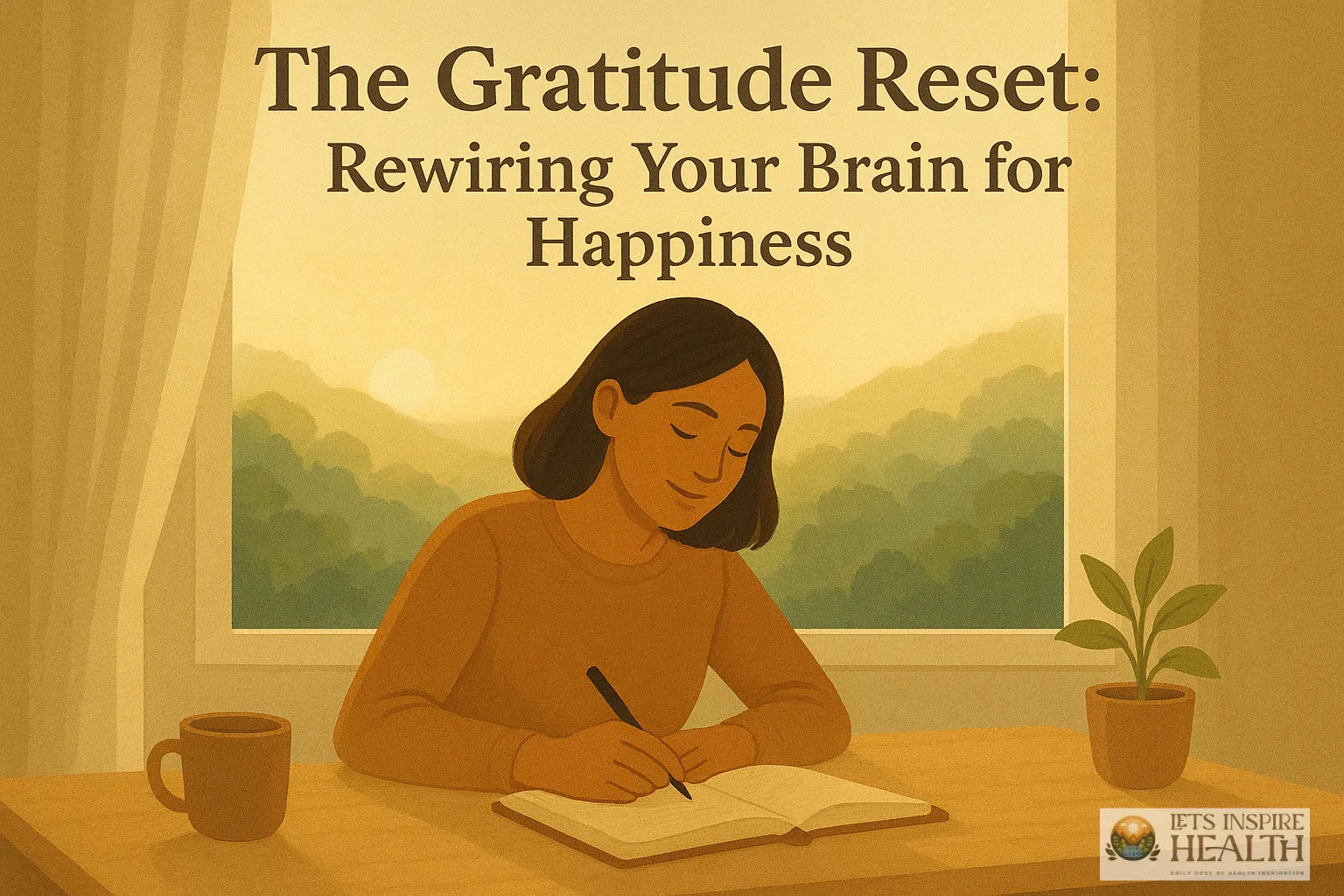
The cornerstone of the Gratitude Reset is a daily gratitude journal. It’s a simple yet profoundly effective technique. The process is remarkably straightforward: Each evening, before you go to sleep, take 5-10 minutes to write down at least three things you are grateful for. These can be big or small – a beautiful sunset, a kind word from a friend, a delicious meal, or simply the fact that you have a roof over your head. The key is to be specific. Instead of writing “I’m grateful for my family,” try “I’m grateful for the laughter I shared with my family tonight.”
How-to Tutorial:
- Set the Scene: Find a quiet space where you won’t be disturbed.
- Grab Your Journal & Pen: Choose a journal you enjoy writing in.
- Start with the Basics: Begin by writing “Today I am grateful for…”
- Brainstorm: List at least three things you appreciate. Be specific!
- Expand: For each item, briefly explain *why* you’re grateful.
- End on a Positive Note: Conclude by expressing a feeling of gratitude.
Pros: Increases awareness of positive aspects of your life, strengthens neural pathways associated with gratitude, provides a tangible record of your appreciation. Cons: Requires consistent effort; it can be challenging to find things to be grateful for if you’re struggling with negative emotions. Effects on Human Health: Improved mood, reduced stress, enhanced self-esteem.
Step 2: The Gratitude Letter – A Powerful Expression
While journaling is fantastic, a gratitude letter takes the practice to another level. A gratitude letter is a handwritten letter (or email) expressing your sincere appreciation to someone who has positively impacted your life. This isn’t about showering someone with empty praise; it’s about articulating *specifically* how they’ve made a difference and the impact they’ve had on your well-being. This act of expressing gratitude can be incredibly powerful for both the giver and the receiver.
How-to Tutorial:
- Choose Your Recipient: Select someone who has had a significant positive influence on your life.
- Reflect: Think about specific instances where this person’s actions or qualities have benefited you.
- Be Specific: Don’t just say “Thank you for your support.” Instead, write, “I am deeply grateful for your unwavering support during my recent challenges. Your belief in me gave me the strength to persevere.”
- Express Your Feelings: Describe how their actions made you feel.
- Deliver the Letter: Hand-deliver the letter for a personal touch, or send it via mail.
Pros: Deepens relationships, strengthens bonds, fosters feelings of connection, provides a powerful expression of gratitude. Cons: Requires vulnerability and a willingness to express emotions. Effects on Human Health: Increased feelings of connection, reduced loneliness, improved social well-being.
Step 3: Shifting Your Perspective – The Art of Reframing
The Gratitude Reset isn’t just about *listing* things you’re grateful for; it’s about cultivating a mindset of gratitude. This involves actively reframing your thoughts and perceptions. When faced with a challenging situation, instead of focusing on the negative – the loss, the frustration, the difficulty – try to identify the positive aspects, the lessons learned, or the opportunities for growth. This is a crucial skill for building resilience and maintaining a positive outlook.
Example: Let’s say you lose your job. Instead of dwelling on the fear of unemployment, you could focus on the opportunity to explore new career paths, develop new skills, or spend more time with loved ones. You could also be grateful for the chance to reassess your priorities and make changes you wouldn’t have otherwise considered.
Technique: Practice “Rose, Bud, Thorn” – At the end of each day, identify one “rose” (something positive), one “bud” (something with potential), and one “thorn” (a challenge you faced). This simple exercise helps you maintain a balanced perspective.
Pros: Increases resilience, fosters optimism, reduces negative self-talk, promotes a growth mindset. Cons: Requires conscious effort and a willingness to challenge negative thoughts. Effects on Human Health: Reduced stress, improved coping mechanisms, enhanced emotional regulation.
Conclusion: Rewiring Your Brain for Happiness
The Gratitude Reset is a transformative practice that can fundamentally shift your perspective and unlock a deeper sense of happiness and well-being. By consistently engaging in the techniques outlined – journaling, writing gratitude letters, and reframing your thoughts – you can rewire your brain for positivity and cultivate a more grateful and fulfilling life. It’s not a quick fix, but a sustainable practice that can bring lasting benefits to your mental, emotional, and even physical health. Remember, gratitude is a choice, and with consistent effort, you can harness its power to transform your life.
Disclaimer: This blog post provides general wellness information and is not intended as a substitute for professional medical advice. If you are experiencing significant mental health concerns or require personalized support, please consult with a qualified healthcare provider. The information presented here is for educational purposes only and should not be used to self-diagnose or treat any condition.